

WASHINGTON (AP) — Consumers were less confident in the economy in November in the aftermath of the federal government shutdown, weak hiring and stubborn inflation.
The Conference Board last week said that its consumer confidence index dropped to 88.7 in November from an upwardly revised October reading of 95.5, the lowest reading since April, when President Donald Trump announced sweeping tariffs.
The figures suggest that Americans are increasingly wary of high costs and sluggish job gains, with perceptions of the labor market worsening, the survey found.
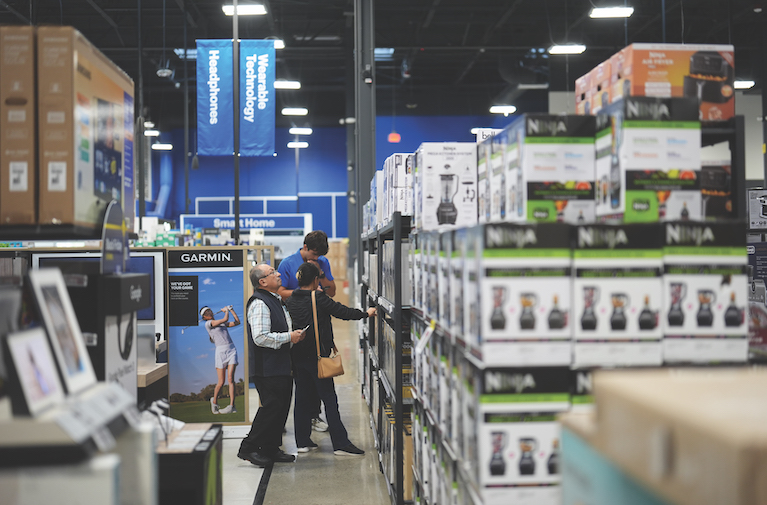
A separate federal government report last week showed that retail sales slowed in September after healthy readings over the summer.
While economists forecast healthy growth for the July-September quarter, many expect a much weaker showing in the final three months of the year, largely because of the shutdown.
Less-confident consumers may spend less, though the connection isn’t always clear. In recent years, consumer spending has held up even when the available data suggests they’ve grown more anxious.
“We do not think that consumer spending is about to hit a cliff, as spending has decoupled from confidence, but risks to the downside are increasing,” Thomas Simons, chief U.S. economist at Jefferies, an investment bank, said.
The proportion of consumers who said jobs are “plentiful” dropped to 27.6 percent in November, down from 28.6 percent in the previous month. It is down from 37 percent in December.
At the same time, 17.9 percent said jobs are “hard to get,” slightly below the 18.3 percent who said so in October. That figure is up from 15.2 percent in September.
The figures on job availability are seen by economists as reliable predictors of hiring and the unemployment rate.
Americans continue to worry about elevated costs, fueling the “affordability” concerns that were a key issue in elections earlier this month.
“Consumers’ write-in responses pertaining to factors affecting the economy continued to be led by references to prices and inflation, tariffs and trade, and politics, with increased mentions of the federal government shutdown,” said Dana Peterson, chief economist at the Conference Board. The shutdown ended Nov. 12.
The economy likely grew at a solid annual rate of about 3 in the July-September quarter, economists estimate, but growth is likely to slow in the final three months of the year, largely because of the shutdown, which cut off pay for federal workers, disrupted contracts, and interrupted air travel.
The Conference Board survey ran through Nov. 18, about five days after the shutdown ended.