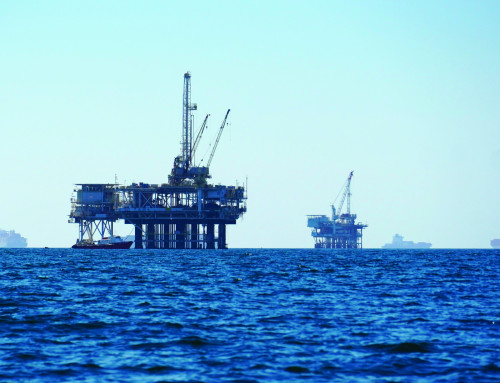


Ohio drillers produced 22.2 percent more oil last year than in 2023, but coal production fell 9.7 percent,
according to a new report from the Ohio Department of Natural Resources.
Overall, the state’s mineral resources produced $1.7 billion worth of geologic commodities, which also include products such as sand and gravel, in 2024.
It’s the 11th straight year the total value of industrial minerals exceeded $1 billion, according to the “2024 Report on Ohio Mineral Industries: An Annual Summary of the State’s Economic Geology,” which is compiled by the ODNR Division of Geological Survey.
The report provides information about the production, value and employment totals of Ohio’s various mineral industries
“While mineral production saw a modest decline in 2024, the increased output of shale, as well as sand and gravel, highlights the sector’s adaptability and importance to key infrastructure and construction markets,” said D. Mark Jones, division chief and state geologist. “More significantly, the value of these commodities continues to rise faster than their production, reflecting increased demand and positioning the industry for continued growth.”
The combined coal and industrial minerals production in Ohio during 2024 was 111.5 million tons, which is down 1.4 percent from 2023.
Industrial mineral production increased for shale, as well as sand and gravel, while production decreased for limestone and dolomite, salt, coal, sandstone and conglomerate, clay and peat.
Last year, the state produced 1.8 billion tons of coal valued at $84.1 million. That value is down 33.6 percent compared to 2023.
Harrison County led the state in coal production, extracting 1 million short tons of coal. The county accounted for 53.5 percent of the state’s coal sales.
Throughout 2024, ODNR issued one surface-mine expansion permit for coal and no underground-mine expansion permits.
There were three new surface coal mine permits issued and no new underground mines permitted. Several coal operations ceased or curtailed production in 2024 because of less-expensive, competing natural gas and decreased demand.
More than 106 million tons of non-fuel industrial minerals, including limestone, sand, gravel and sandstone, were sold from state mines last year, a 2.7 percent decrease from 2023.
In 2024, the production-leading commodity of limestone and dolomite was down 0.5 percent from 2023, with the second-leading commodity of sand and gravel up 0.1 percent from 2023; the third-leading commodity of salt was down 11.3 percent from 2023; the fourth-leading commodity of coal was down 9.7 percent from 2023.
Mineral industries sold resources worth approximately $150 per Ohioan while production of shale increased by 28.5 percent.
Approximately 118,659 more tons were produced in 2024 compared to 2023.
Sales values increased for limestone and dolomite, sand and gravel and salt.